
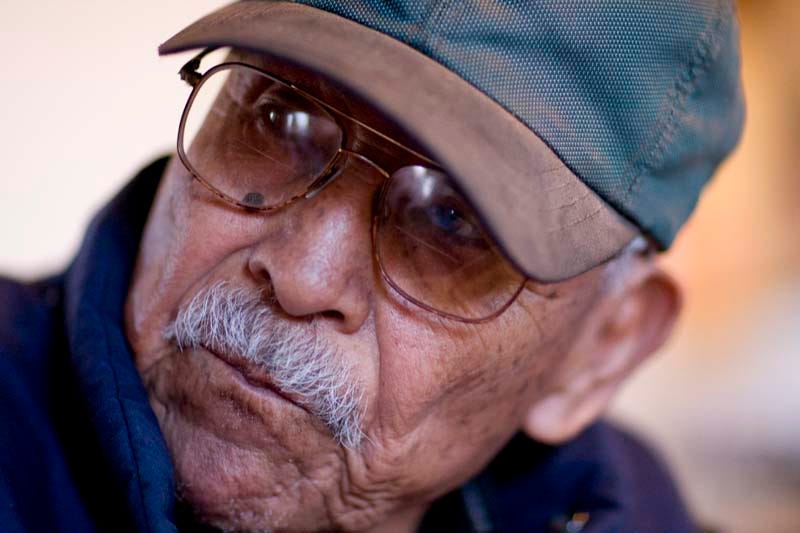
Sam Tso, Code Talker
The People Along the Way 3

Your likes, comments, shares, and recommendations, and your free and paid subscriptions help gain attention for my writing and aid the mission to offer a renascent light against the darkness: art, information, culture, and ideas for a free, tolerant, and democratic people. If you read by email, all you need do is click the title to access the Homo Vitruvius site to offer a like or comment. Even the modest monthly subscription rate of $2 gains access to the full archive.
This weekend, we are bringing to a close more than a month of travel. It’s been a busy time. I’m glad I managed to complete something new for last week, but alas not this one. Time, then, for another promised past profile. Originally published in 2009, I republished this profile during the first summer of Homo Vitruvius, two and a half years ago.
Two points beyond the bounds of the profile. First, there is a profound resonance to be felt in the presence of aged people of extraordinary experience. You have to open yourself to being attuned. After all, they’re just people like you, aging, like you, a little ahead of you. But etched into them in some ineffable way are the experiences of their lives, in inarticulable memory and feeling, and how the sun alights on their flesh each day. There are moments when I try to capture that with Sam. There were ways that this old lanky Navajo warrior reminded me of my lean old Ukrainian Jewish father.
Then there is the conundrum to which there can only be singular, personal resolutions. How — why — does a Native American go to war to fight for the nation built by invaders from the conquest of his people? One not uncommon answer I encountered during my travels in Indian Country, and it was Sam’s, is that he didn’t fight for the American nation — he fought in defense of the land, of his people, his family. Notions like “nation,” “land,” and “people” — of citizenship and belonging, are much on my mind these days, as the American nation into which I was born and to which all my grandparents and father emigrated in desperate hope quickly disappears. I’m working toward my own resolution.
♦ ♦ ♦
Originally, there were twenty-nine. They developed the code. Then came about 390 more. Sam Tso numbered among the 390. During the Second World War, he served as a Navajo Code Talker.
It had been done before, during the First World War, on a smaller scale, employing the Cherokee and the Choctaw. The Comanche served a similar role during World War II in the European Theater, including on D-Day, but the U.S. knew that Hitler, aware of the Native languages, had sent anthropologists to the U.S. in a futile attempt to learn them. So, to be safe, the U.S. Army made only limited use of Comanche.
Not so in the Pacific War, for which Philip Johnston, whose missionary parents had raised him on the Navajo Reservation, suggested the development of a Navajo code. Few non-Navajos knew the unwritten language, so the first level of encoding was the language itself. That first group of Code Talkers then developed the code words. Never written down, they had to be memorized. It survived as one of the few unbroken codes in military history, remaining classified until 1968.
Sam Tso, Code Talker, resides in Lukachukai, a Navajo settlement of about 1700 with two water towers and a trading post at the base of the Lukachukai Mountains. The nearest town with a business center is Chinle, forty-five miles away. The median family income comes in at just over $10,000 dollars a year, and over 60% of the population live below the poverty line. The landscape, stark and beautiful, flat, yet raised up in majesty by mountains that rise out of the even plane like ancient beings, red and brown, is peopled, too, by men and women, drunk and sober, who hang around the Totsoh Trading Post to beg a dollar. When the wind blows, the red earth sweeps over you like a Dust Bowl storm.
Tso lives with Ann, his wife of over fifty years, in a small one-story house on a plot of land up a dirt road. They share their house with their daughter Arleen, Arleen’s daughter and son-in-law, and two great-grandchildren. After introductions and kindnesses, Julia began, in her unobtrusive way, to shoot photos. I sat across from Tso at a table in the small kitchen.
How did Sam Tso become a Code Talker?
He was raised on the reservation, he was Navajo, and the Navajo live by a matriarchal clan system. His older sister, he felt, disparaged him. He felt demeaned. At nineteen, he’d had enough. He took off for Gallup, New Mexico, the nearest big town off the reservation. He left with no money, not for anything, not even food.
“So I drank water and pulled in my belt another notch.”
Tso had heard there was work to be had on the railroad, which runs through Gallup, but you had to be twenty-one to get it. Then he learned there were people who could provide him a fake ID.
“In the morning, I was nineteen. In the afternoon, I was twenty-one.”
In war time, though, like World War II, when there is a draft, the government employs men to search for draft dodgers. One day a couple of them showed up at the rail yards, where Tso, when asked, told them his real age. He wasn’t dodging the draft. He was just a nineteen-year-old trying to survive on his own. The men gave him a choice. He could be unemployed, or he could register with the government. So he registered. A month later, he was drafted into the Marines.
And Tso became a Code Talker. He fought at Iwo Jima. For perspective, over eight years of U.S. combat operations in Iraq, the military suffered 4424 U.S. killed in action. On Iwo Jima, 6825 U.S. servicemen died in just thirty-five days. Nearly 22,000 Japanese soldiers died. The U.S. military awarded twenty-seven Medals of Honor for actions on Iwo Jima — more than half, 14, posthumously — thirty percent of all the Medals of Honor awarded to Marines in the entire Second World War.
When the war ended, Tso landed at Fort Pendleton, in Oceanside, California, from where he sought his way back to the Navajo Nation. Soldiers mustering out were lined up for a mile for the Greyhound buses that took them home. Tso waited for a day. His bus took him only as far as Flagstaff, Arizona. He decided to hitch the rest of the way. A white man — a New Yorker — picked him up on the side of the road. As they traveled, they passed Arizona’s Petrified Forrest, and the New Yorker said he’d like to see it. So they went. After, the white man treated Tso to lunch. He ordered them both a beer.
But the proprietor wouldn’t serve Tso. He didn’t serve Indians, he said.
“This man is a war hero,” the New Yorker said, “and you won’t serve him?”
The two men argued. The New Yorker won. Tso got his beer.
“I enjoyed it,” Tso says.
The white man dropped Tso in Gallup and Tso has never seen him again. He wishes he knew where he was.
“I’d like to thank him,” he says.
Because no one in his family could write English, Sam never received mail during the war. So it wasn’t until he arrived home from Gallup that he learned that both his father and mother and one of his sisters had died while he was away. It was all too much. At night, he couldn’t sleep. And in the morning, the unkind sister was still there.
Tso headed off again.
He had gone about a mile when his brother caught up to him. Where was Sam going? What would he do?
“There’s something down the road,” Sam said.
Then, in the indirect way Navajos sometimes talk, Sam’s brother told him that another sister, who was living in San Francisco with her husband and children, also didn’t know about the deaths of their parents and sister. Sam understood this to be a suggestion that he go to San Francisco instead. So he said he would.
His brother offered Sam a horse. He told him to ride it to a church elsewhere on the reservation, from where he could catch a bus. Leave the saddle at the church, his brother told him, and let the horse go. He’ll come home. Sam did as his brother instructed. When he glanced back at the horse, he was heading in the direction of home.
What happened in San Francisco with the sister and the husband, who abused her, is another story. But Sam took care of it.
That was all a long time ago.
When Tso is asked if he minds saying how old he now is, he replies, “Sometimes I do.”
He and Ann have some livestock, and Sam, who had his license taken from him, now just works around the property or in the tool shed.
“When you lose license, you lose all your freedom. You can’t do anything.”
Sam relies on Arleen, who is unemployed, to drive him around. That’s her job. She drives him to the Indian Health Service for his care, though he is strikingly lean and fit for whatever age he is. He tried to use the VA Hospital, where the care is superior, but they told him there to use the Indian Health Service, which is closer, instead.
“They thought I was just trying to collect the travel money,” he says.
Arleen also drives Sam to the many events around the country at which he is invited to speak about his experiences as a Code Talker. One experience, that greatest and worst of all, was on Iwo Jima.
Sam was part of a force attempting to make its way across a long ravine. The Japanese had machine gun nests at the other end. Repeatedly, they just mowed down the Marines who tried to move through. Tso and another marine were assigned to make it through on their own, just the two of them, to locate those machine gun placements and report back. When the two first came over a rise into the ravine, they saw below them the piles of dead Marines struck down in the earlier assaults. There were men still alive, crying out for help. Tso and his comrade knelt to see what they could do. There came from behind them the shouted command of their Sergeant.
“Complete your mission!”
“So we did,” Tso recalls. “We had to leave them behind.”
Tso and the other Marine made it back safely with their sightings on the gun placements. Even back at their own lines, though, the fire was so intense, the prospect of the next assault so fearsome, Marines were shaking with fear.
“Men’s teeth were chattering.”
But they all saw that Tso showed no fear.
He had had a dream. In the dream, an Indian woman gave him a necklace and told him that as long as he wore it, no harm would come to him. The next day, though he normally received no mail, an envelope arrived from his family. It contained a juniper bead necklace. Once Sam placed it around his neck, all fear faded from him.
The other Marines said, “Chief, you know that’s horse shit.”
Tso answered, “It may be horse shit, but it’s what I believe.”
Sam pauses and stares at me.
I gaze into Sam Tso’s eyes, and I know, from staring into my father’s eyes, that behind them a film is playing, a light show of images flickering on a screen of memory, of a small volcanic island in the Pacific Ocean carpeted with bodies, and with the char of hell recalled in his nose.
“They’re all dead,” Sam says. “I’m alive.”
Sam Tso, alive, is in demand. Vice-President of the Navajo Code Talkers Association, its ranks of the living fast diminishing, Tso has been back to Iwo Jima a few times, once for a National Geographic documentary. He has been filmed for other documentaries, interviewed for books. There are always invitations to speak. His expenses are always paid, only sometimes financial promises made, so far unkept.
Everyone thinks Sam Tso is a hero.
Does he feel like a hero?
“A poor hero,” he says.
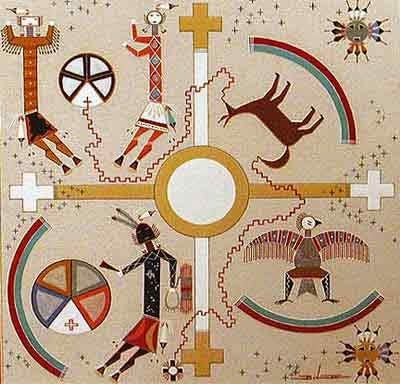
Days after visiting with Sam Tso, Julia and I meet with Robert Yazzie, Chief Justice Emeritus of the Navajo Nation and Director of the Diné Policy Institute. He is working, mentally, visibly, to explain to us a Navajo conception of justice. Finally, his face shows me he’s decided. Cai-YOH-tay, he says to us in his Navajo pronunciation of the English coyote, though the word in the Navajo language is ma’ii. Coyote is a profound, mystical, almost all-encompassing figure in Navajo mythology and cosmology, a trickster god or figure, but also a Prometheus and a first-mover, and a principle of order and harmony. A contradiction.
On May 9, 2012, Sam Tso, as Native Americans say, walked on. He was 89 years old.
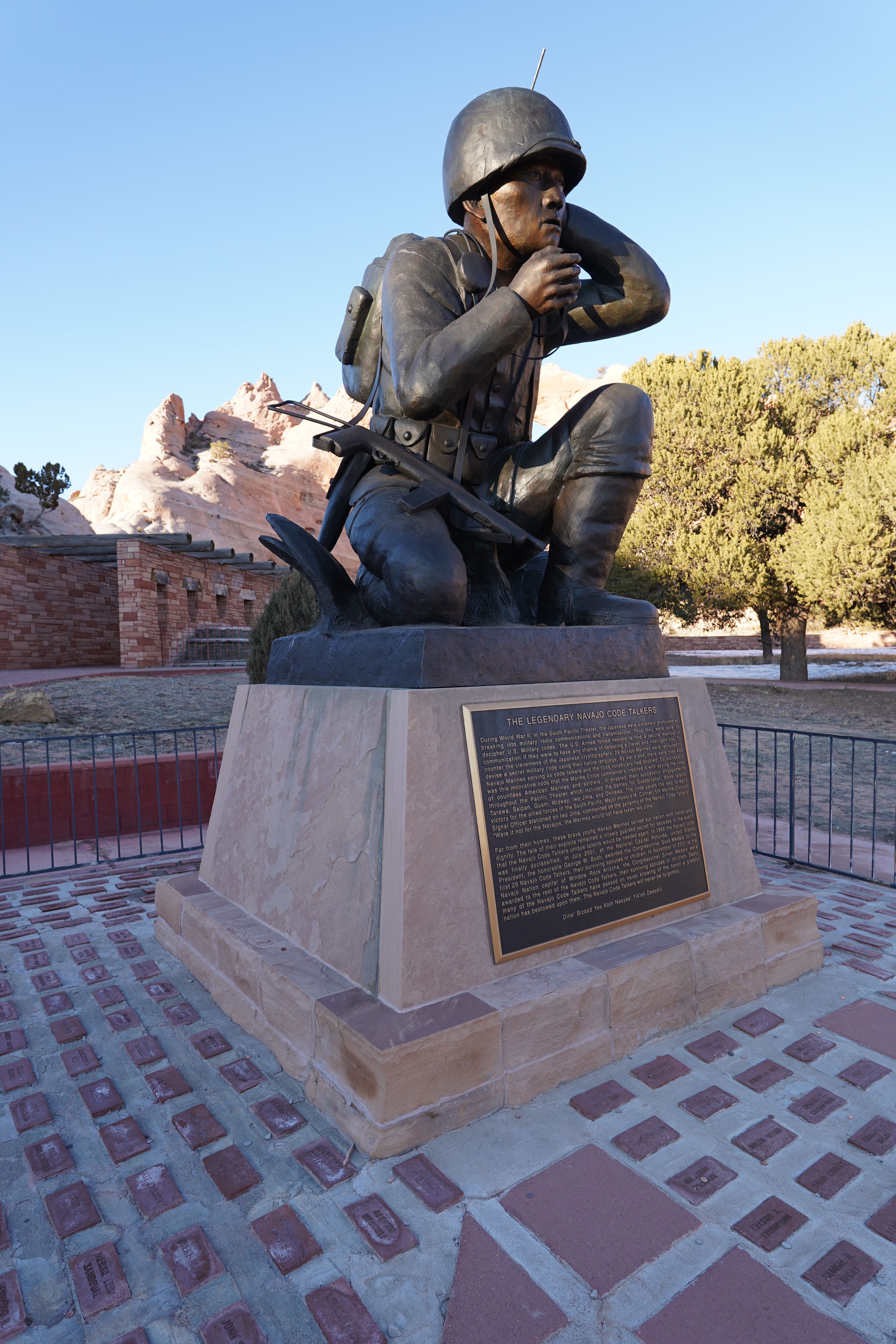
In 2014, the last of the original 29, Chester Nez, died. As of 2023, when I first republished this profile, three Navajo Code Talkers still lived: Peter MacDonald, John Kinsel, Sr., and Thomas H. Begay.
John Kinsel, Sr. walked on October 19, 2024.

AJA
Homo Vitruvius and American Samizdat serve as my weekly open house, a salon in which I offer for your view some of my creative writing and intellectual exploration. HV persists as my original and primary Substack of these offerings; AS arose in resistance to Trumpism and in defense of Enlightenment liberalism. From memoir and poetry to fiction and drama, mostly in HV, to history and political philosophy, predominantly in AS, you will find them across the two stacks, which may be subscribed jointly or singly in Manage Subscription.
Poet. Storyteller. Dramatist. Essayist. Artificer.
An elegant and moving tribute to a great American.
God bless Sam.
God bless them all.
God have mercy on us.